


In the volatile world of cryptocurrency, stablecoins have emerged as the quiet, indispensable backbone. But as global finance faces new tests of speed and sovereignty, these digital assets are moving from the sidelines to center stage, becoming one of the most critical and scrutinized innovations of our time.
The Digital Dollar in Your Pocket: What Exactly is a Stablecoin?
At its core, a stablecoin is a type of cryptocurrency designed to have a stable value, pegged to a reserve asset like the U.S. dollar. Unlike Bitcoin or Ethereum, whose prices can swing wildly, a dollar-pegged stablecoin aims to always be worth $1.00. They achieve this by holding a basket of reserves—often cash, cash equivalents, or short-term government bonds—that back each token in circulation.
Think of it as a digital IOU. When you hold one USDC token, the issuing company (Circle) should, in theory, hold one U.S. dollar (or its equivalent) in a bank account to back it. This mechanism creates a bridge between the traditional financial world (TradFi) and the new world of digital assets (DeFi), allowing for seamless, near-instant transactions without the volatility associated with other cryptocurrencies.
The main types of stablecoins are:
-
Fiat-Collateralized: The most common type, backed 1:1 by fiat currency like the USD or Euro (e.g., Tether’s USDT, Circle’s USDC).
-
Crypto-Collateralized: Backed by other cryptocurrencies, but over-collateralized to absorb price swings (e.g., DAI, which is primarily backed by Ethereum and other crypto assets).
-
Algorithmic: Not backed by traditional assets, but use algorithms and smart contracts to control the supply and demand, aiming to maintain the peg. This category has seen high-profile failures, like the collapse of TerraUSD (UST) in 2022.
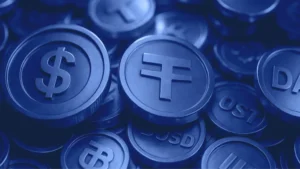
The Engine of Modern Crypto: Why Stablecoins Are Indispensable
Stablecoins are not just a novelty; they are the fundamental plumbing of the entire crypto ecosystem. Their utility is vast and multifaceted:
-
A Safe Harbor in a Stormy Market: For traders, stablecoins provide a quick way to exit volatile positions without the need to cash out entirely back to fiat currency, a process that can be slow and expensive. During market downturns, capital floods into stablecoins as a “digital dollar” safe haven.
-
The Lifeblood of Decentralized Finance (DeFi): The entire DeFi ecosystem—comprising lending, borrowing, and trading protocols—runs on stablecoins. They are the primary medium of exchange and unit of account. You can lend your USDC to earn interest, use it as collateral to borrow against, or provide it as liquidity in a trading pool. Without stablecoins, DeFi would be forced to use volatile assets, making lending and pricing impossibly risky.
-
A Powerhouse for Global Payments and Remittances: For cross-border transactions, stablecoins are revolutionary. Sending $1 million in USDC can settle in seconds for a fraction of a cent, a stark contrast to the traditional SWIFT system, which can take days and cost hundreds of dollars in fees. This has profound implications for international trade and for migrant workers sending remittances back to their families.
-
A Gateway for Institutional Adoption: Large financial institutions and corporations are far more comfortable transacting in a stable, dollar-denominated digital asset than in a volatile cryptocurrency. Stablecoins provide the foundational layer upon which institutional-grade financial products are being built.
The Tipping Point: Why Stablecoins Matter More Than Ever Now
While stablecoins have been important for years, a confluence of economic, technological, and geopolitical factors has catapulted them into unprecedented relevance in the current moment.
The High-Interest Rate Environment and the “Yield Game”
In a world where traditional savings accounts offer meaningful interest, the promise of “yield” from holding stablecoins has become a major point of attraction and scrutiny. DeFi protocols often offer higher yields on stablecoin deposits than those available from banks. This has drawn in both retail and institutional capital seeking better returns. However, this also raises critical questions about risk. Are users adequately compensated for the smart contract risk, counterparty risk, and regulatory uncertainty they are taking on compared to an FDIC-insured bank account? The current macroeconomic climate has turned stablecoin yield into a central narrative, forcing a broader conversation about digital asset risk versus reward.
The Global Race for Digital Sovereignty
The United States’ delayed approach to creating a central bank digital currency (CBDC) has created a vacuum. In the meantime, U.S. dollar-pegged stablecoins like USDT and USDC are being adopted globally, effectively creating a digital dollar ecosystem that operates outside the direct control of the Federal Reserve. This is not just a technological shift; it’s a geopolitical one. It extends the reach and influence of the U.S. dollar in the digital age, potentially cementing its status as the global reserve currency for decades to come. Other nations are watching closely, concerned about “digital dollarization” of their economies.
The Impending Regulatory Earthquake
The catastrophic collapse of TerraUSD in 2022, which wiped out over $40 billion in value, was a wake-up call for regulators worldwide. It exposed the profound risks of algorithmic stablecoins and highlighted the lack of consumer protections in the broader market. This event directly catalyzed the current push for comprehensive stablecoin legislation.
In the United States, bills like the Lummis-Gillibrand Payment Stablecoin Act are making their way through Congress. This proposed legislation aims to create a federal framework for stablecoins, establishing clear rules for issuance, reserve requirements, and oversight. The passing of such a law would be a watershed moment, legitimizing the asset class for traditional finance and potentially unleashing a wave of institutional adoption. The “now” is defined by this palpable tension—the industry is on the cusp of either being fully integrated into the financial mainstream or being heavily constrained by new rules.
The Other Side of the Coin: Risks and the Road Ahead
For all their promise, stablecoins are not without significant risks that must be understood:
-
Counterparty and Reserve Risk: The “IOU” is only as good as the issuer. Is the company actually holding the reserves it claims? Are those reserves liquid and secure? The history of Tether (USDT) is filled with controversy and settlements over the transparency of its reserves.
-
Systemic Risk: As stablecoins grow into a multi-trillion dollar market, their failure could pose a systemic risk to the entire global financial system, similar to the failure of a major bank. A “run” on a large stablecoin could trigger a cascade of liquidations across crypto markets and spill over into traditional finance.
-
Regulatory Uncertainty: The current patchwork of state-by-state regulations in the U.S. creates confusion and hinders innovation. Clear, consistent federal law is needed to provide a safe path forward.

Conclusion: More Than Just a Crypto Tool
Stablecoins have transcended their original purpose as a trading tool. They have evolved into a critical piece of financial infrastructure with the potential to make the global financial system faster, cheaper, and more accessible. The current moment is a perfect storm of economic opportunity, geopolitical consequence, and regulatory reckoning.
The decisions made by policymakers in the coming months, and the trust established by issuers, will determine whether stablecoins fulfill their destiny as a pillar of a new digital economy or remain a niche asset constrained by its own early-stage growing pains. One thing is clear: to understand the future of money, you must first understand stablecoins. Their time is now.